
Who Was E. W. Kenyon?
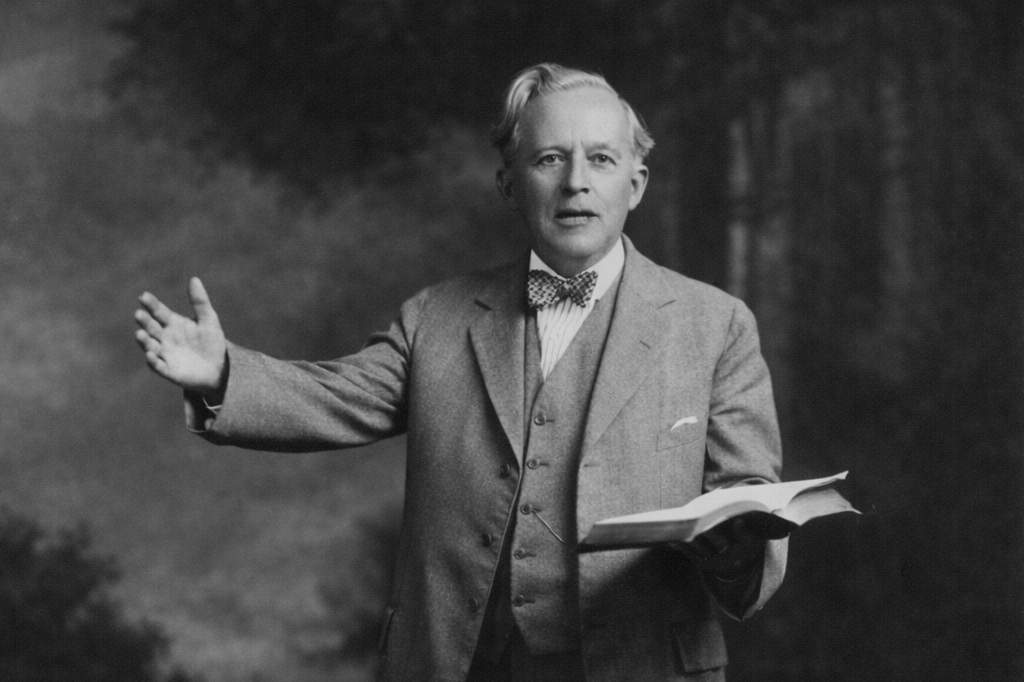
Who was E. W. Kenyon By Tyrone Singh
E. W. Kenyon (1867–1948) was one of the most influential Bible teachers of the early twentieth century—yet often one of the most understated. While others were known for large crusades and public miracles, Kenyon’s impact came through something deeper: a revelation of the Word of God and the believer’s identity in Christ.
His teachings would go on to shape what many later recognised as the foundation of the Word of Faith movement.
Born in 1867, Kenyon experienced conversion at a young age and later pursued theological training. But what set him apart was not just education—it was revelation. He became deeply passionate about communicating the realities of redemption in a way that was not only doctrinal, but practical and life-changing.
Kenyon didn’t just preach what Christ did for us—he emphasised what Christ accomplished in us.
One of the central themes of his ministry was the distinction between sense knowledge and revelation knowledge. He taught that faith is not built on feelings, circumstances, or human reasoning—but on what God has revealed through His Word. When the Word becomes real to the heart, faith is no longer a struggle—it becomes a natural response.
To Kenyon, the Bible was not history—it was God speaking now.
He believed that when a believer takes God’s Word personally and acts upon it, the same results seen in the ministry of Jesus can be experienced today. This was especially evident in his teaching on healing. Kenyon consistently taught that healing is not reserved for a select few—but is part of the believer’s redemption in Christ.
Sickness, in his view, was not from God—it was an enemy to be resisted.
Rather than focusing on symptoms or circumstances, he urged believers to anchor themselves in what God has said. For Kenyon, the Word was final authority.
Through his books, sermons, and Bible training, he equipped believers to live in the reality of who they are in Christ. His message consistently centred on truths such as:
Righteousness as a gift—not something earned
The authority of the believer in Christ
The power of confession—aligning words with God’s Word
The reality of union with Christ
Though Kenyon did not conduct large-scale healing crusades like some who came after him, his influence reached far beyond what could be seen on a platform. His writings deeply impacted ministers such as Kenneth E. Hagin and others, who would carry these truths to a global audience.
Kenyon’s ministry was marked by clarity, depth, and a strong commitment to Scripture. He avoided emotionalism and instead focused on building solid, Word-based faith. His goal was never to draw people to himself—but to lead them into a personal, living relationship with God through His Word.
He went home to be with the Lord in 1948, but his voice still speaks.
Today, his legacy lives on in believers who have discovered who they are in Christ—who walk in righteousness, speak the Word with confidence, and live in the authority and victory that belong to them.
A PERSONAL REFLECTION
What stands out to me about E. W. Kenyon is not just his teaching—but his clarity.
He stripped away confusion and brought believers back to something simple, yet powerful:
What does God say—and will I believe it?
He didn’t build dependency on experiences—he built faith on the Word.
In a world full of noise, opinions, and emotional swings, that kind of foundation is rare.
And needed.
His life reminds me that true strength in the believer’s walk doesn’t come from hype—it comes from revelation.
PRAYER
Father,
Thank You for the men and women who have gone before us—those who faithfully taught Your Word and revealed the realities of who we are in Christ.
Lord, I ask that You would give me a deeper hunger for Your Word—not just to read it, but to know it, to believe it, and to live it.
Open the eyes of my understanding.
Let revelation knowledge flow into my heart.
Help me to see myself the way You see me—righteous, accepted, and empowered in Christ.
Teach me to walk by faith—not by feelings.
To speak Your Word with boldness.
To stand on truth, regardless of circumstances.
Holy Spirit, make the Word alive in me.
Let it produce fruit—faith, healing, strength, and victory.
Let my life reflect the reality of redemption.
In Jesus’ Name,
Amen.
